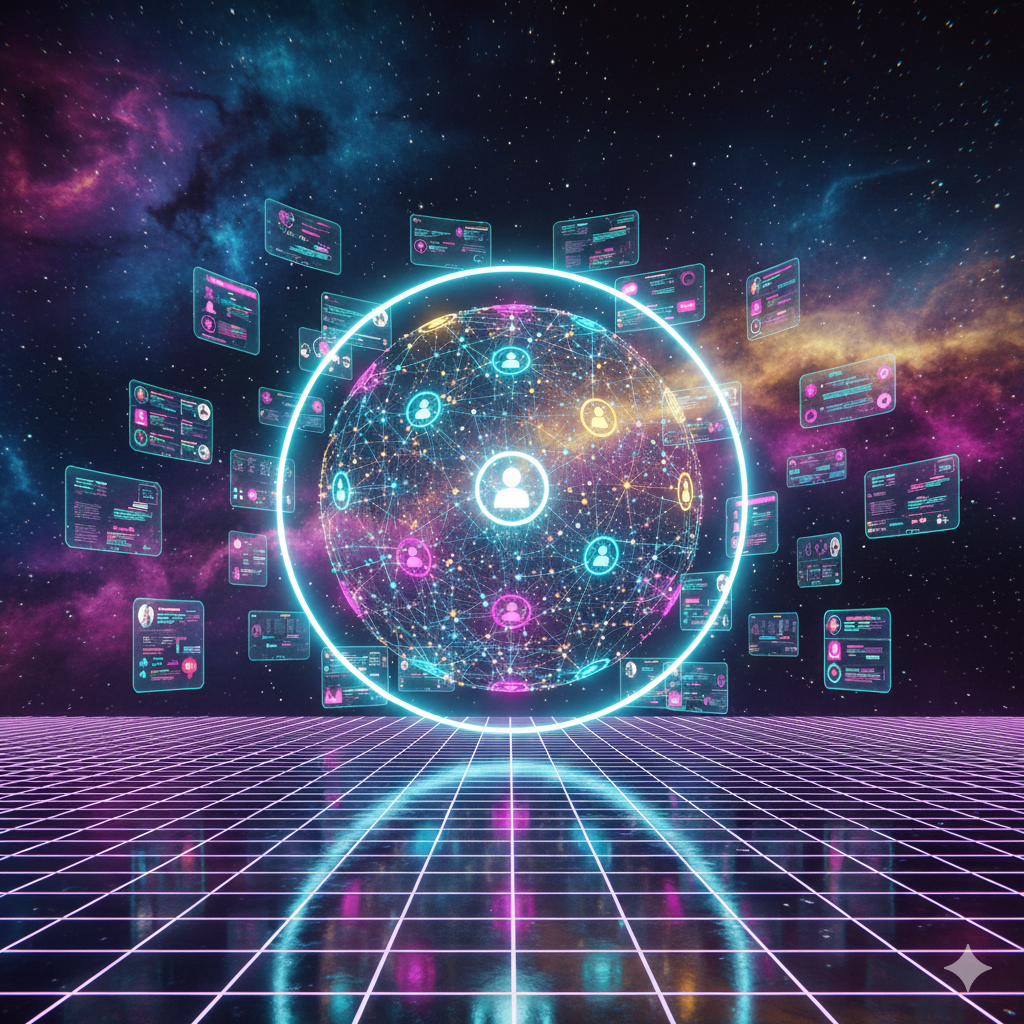
Over the past decade, social media has become one of the most powerful forces shaping society. Yet beneath its global influence lies a fragile foundation built on centralization. A handful of tech giants control what we see, how we interact, what data we give away, and even which voices are amplified or silenced.
Now, in 2025, an alternative is emerging — decentralized social media, powered by Web3 technologies. These platforms promise to give users control of their data, eliminate centralized gatekeepers, and reshape the economics of online interaction.
But the key question remains: Can Web3 truly reinvent how we connect online?
The answer is more complex — and more exciting — than a simple yes or no.
The Problem With Today’s Social Platforms
Traditional platforms like Facebook, Instagram, TikTok, and X (Twitter) all operate on centralized infrastructures. This setup creates several long-standing issues:
1. Users Don’t Own Their Data
Every message, image, and personal detail is stored on servers owned by corporations. Users can be removed, censored, or restricted at any time, losing access to their digital identities.
2. Monetization Is One-Sided
Creators generate content, but platforms earn the majority of the profits. Most users receive nothing despite fueling engagement.
3. Algorithms Shape Public Opinion
Recommendation engines — entirely controlled by corporations — determine what content becomes viral, often prioritizing controversy or profit over accuracy.
4. Privacy Erosion
Personal data is tracked, analyzed, and often sold to advertisers or third parties.
5. Lack of Transparency
Users have no insight into moderation decisions, data handling, or how their content is ranked.
These problems have created a strong demand for alternatives. This is where decentralized social networks enter the conversation.
What Is Decentralized Social Media?
Decentralized social networks use blockchain, peer-to-peer protocols, and token-based economies to create platforms that aren’t controlled by a single company.
In Web3 social networks:
- Users own their data
- Identities are portable across apps
- Communities can govern the platform
- Content lives on decentralized storage
- Monetization flows directly to creators
- Censorship decisions aren’t dictated from the top
Platforms like Lens Protocol, Farcaster, Mastodon, and CyberConnect are already exploring these ideas, each with slightly different approaches.
User-Owned Identity: The Core Innovation
The most transformative feature of decentralized social media is the introduction of user-owned identity.
Instead of creating a separate account for every app, users maintain:
- A universal decentralized profile
- Social graphs stored on blockchain
- Portable follower networks
- Verifiable, tamper-proof history
This means if a platform shuts down, changes its rules, or becomes pay-to-play, the user’s entire identity remains intact. They can simply log into another compatible app with all their connections preserved.
This fundamentally reverses the power dynamic — the network belongs to the user, not the platform.
Monetization Reinvented: Creators Finally Benefit
Web3 social platforms introduce new economic models that reward users and creators directly.
Examples include:
- Microtransactions for posts, messages, or exclusive content
- Tokenized communities where users gain governance rights
- NFT-based content ownership
- Tip systems powered by crypto
- Revenue sharing based on contribution
- Creator tokens representing influence or access
Instead of relying solely on ads, decentralized social media opens a world where creators can monetize more fairly — and instantly.
Censorship and Moderation: A New Approach
One of the biggest concerns with centralized platforms is censorship. But decentralization doesn’t mean a lawless environment. Instead, Web3 enables:
1. Community-Governed Moderation
Users can vote on rules, content standards, and bans.
2. Transparent Processes
Decisions can be logged on-chain or made through open governance mechanisms.
3. Forkable Platforms
If a community disagrees with moderation policies, they can “fork” the platform and create their own version — something impossible with centralized apps.
This creates a healthier balance between freedom of speech and community safety.
Decentralized Storage: Solving the Data Problem
Instead of storing content on corporate servers, Web3 social networks use decentralized storage solutions such as Arweave, IPFS, and Filecoin.
Benefits include:
- No single point of failure
- Censorship resistance
- Long-term persistence
- Cross-platform compatibility
Users truly own their data — not the companies behind the platform.
Interoperability: Social Media Without Walls
Imagine following someone once and seeing their content across multiple apps — without needing new accounts or separate feeds.
Web3 social networks aim to create:
- Shared social graphs
- Shared content layers
- Unified identities
- Interconnected profiles
This is the opposite of traditional «walled gardens,» where each company isolates its users to maximize profits.
Interoperability makes the digital world feel more user-centric and connected.
Real Challenges That Still Need Solutions
Despite its potential, decentralized social media still faces major hurdles.
1. User Experience Complexity
Seed phrases, wallets, and blockchain mechanics still intimidate everyday users.
2. Scalability Issues
Storing and indexing massive amounts of social data on decentralized networks remains challenging.
3. Monetization Adoption
Many users are not yet comfortable paying micro-fees or using tokens.
4. Moderation Conflicts
Community governance can lead to disagreements or fragmentation.
5. Network Effects
Existing platforms have billions of users — Web3 alternatives are still small in comparison.
The transition won’t happen overnight, but the momentum is accelerating.
A Future Where Social Media Works for Users, Not Corporations
Decentralized social platforms represent a philosophical shift:
- From surveillance to privacy
- From corporate ownership to user control
- From advertising-driven feeds to community-driven networks
- From isolated platforms to interoperable ecosystems
As Web3 infrastructure grows, decentralized social media may become the default way people communicate online — especially among younger generations who value ownership, transparency, and autonomy.
Conclusion: Can Web3 Reinvent How We Connect Online?
The answer is yes — but gradually. Web3 won’t replace traditional platforms immediately, but it will introduce competition, innovation, and much-needed alternatives.
Decentralized social media has the potential to:
- Restore control to users
- Create fair economic models
- Protect online identity
- Increase transparency
- Reduce corporate influence
- Foster healthier digital communities


Más historias
Can the World Avoid a 2025 Recession? Economists Are Divided
The Future of Work and Automation: How It Will Reshape the Global Economy
The Global Debt Problem Is Worse Than You Think