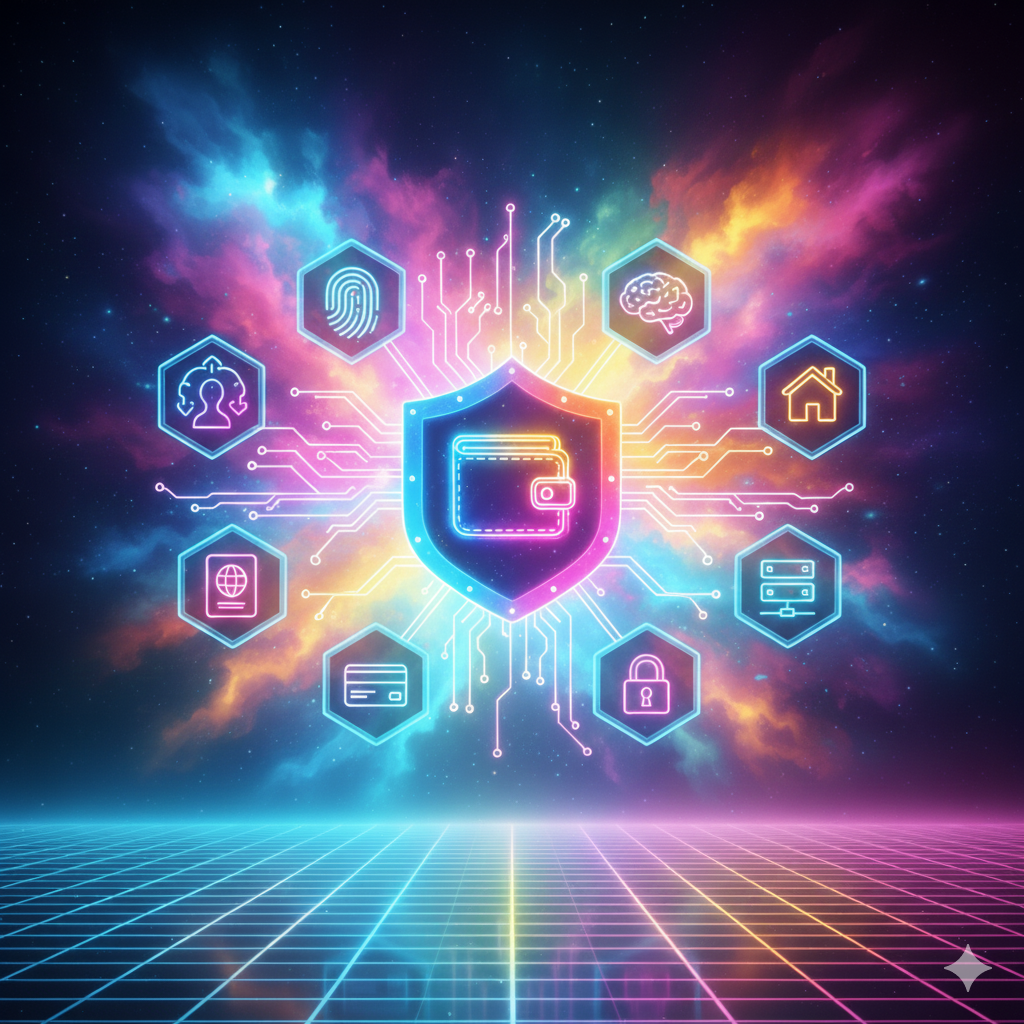
In the early days of crypto, wallets were simple tools meant for one thing: storing and sending digital tokens. They were functional, but rigid, difficult to use, and intimidating for newcomers. Losing a seed phrase meant losing everything. Interacting with decentralized applications (dApps) required complex steps. And identity management was nonexistent.
Fast-forward to 2025, and a new type of wallet is emerging — the smart wallet, a powerful upgrade that blends identity, automation, security, and user-friendly design into a single tool. These wallets represent the next big evolution in Web3, allowing users to interact with blockchain systems as easily as they navigate traditional apps.
Smart wallets are no longer just places to store crypto. They’re becoming the central identity layer of Web3.
What Exactly Is a Smart Wallet?
A smart wallet is a blockchain wallet enhanced by smart-contract functionality, allowing it to do things traditional wallets cannot. Instead of being tied to a static private key, a smart wallet operates through programmable logic.
This means a smart wallet can:
- Recover accounts without seed phrases
- Approve transactions automatically
- Manage assets across multiple chains
- Integrate identity credentials
- Set spending limits
- Enable multi-user permissions
- Use biometrics instead of private keys
- Execute complex operations with one click
These features make smart wallets feel more like modern fintech apps than the primitive crypto wallets of years past.
Account Abstraction: The Technology Behind Smart Wallets
The rise of smart wallets is possible thanks to a major innovation: account abstraction (AA).
Traditionally, users interacted directly with private-key accounts — a fragile and unforgiving design. Account abstraction replaces this system by allowing wallets to operate as smart contracts.
With AA, a wallet can:
- Let users pay for gas in any token
- Automate approvals
- Offer secure login options like email or biometrics
- Perform multiple blockchain actions in a single transaction
- Enable programmable security rules
This changes the entire Web3 experience. Instead of the user adapting to blockchain limitations, the wallet adapts to the user.
From Wallet to Identity: The Rise of Web3 Identity Layers
The biggest shift happening in 2025 is that smart wallets are evolving into identity hubs.
Instead of storing only digital assets, smart wallets now store:
- Decentralized identity (DID) profiles
- Reputation scores
- On-chain credentials
- KYC data (encrypted and user-controlled)
- Membership badges
- Access rights to dApps, games, and communities
With a smart wallet, users can:
- Prove their identity without sharing personal data
- Carry reputation across platforms
- Access apps based on verifiable credentials
- Control who can see or use their information
This gives users the power to own their digital identity, rather than handing it over to big tech platforms.
Seed Phrases Are Dying — Smart Recovery Is Taking Over
For years, the fear of losing a seed phrase was one of the biggest barriers to Web3 adoption. Smart wallets solve this with smart recovery methods, such as:
- Social recovery
- Biometric authentication
- Trusted device networks
- Time-delayed withdrawals
- Cloud-backed encrypted backups
- Multi-signature approvals
Instead of relying on a single fragile private key, smart wallets distribute security across multiple methods. This makes onboarding far easier and significantly safer for everyday users.
Cross-Chain Functionality: One Wallet for Everything
Web3 used to require multiple wallets for different blockchains. Smart wallets eliminate this problem through cross-chain abstraction.
Modern smart wallets can:
- Manage assets across multiple chains
- Sign transactions that execute on different networks
- Automatically pick the best network for the user
- Bridge assets in the background without user intervention
This means users don’t need to know which blockchain a dApp runs on — the smart wallet handles everything behind the scenes.
The Impact on DeFi and Digital Commerce
Smart wallets are transforming entire industries, especially DeFi and digital commerce.
For DeFi:
- One-click staking, swapping, or lending
- Automated yield strategies
- Built-in security protections
- Risk alerts and transaction simulations
- Auto-stop-loss features
DeFi becomes accessible to people with no technical experience.
For digital commerce:
- Programmable subscriptions
- Token-gated content
- Automated micro-payments
- Proof-of-purchase NFTs stored in the wallet
- Seamless checkout experiences
Smart wallets bring Web3 commerce closer to mainstream financial apps.
Security: Stronger, Smarter, More Adaptive
Smart wallets are significantly more secure than traditional wallets because they allow customizable protection. Users can set:
- Daily spending limits
- Session keys for specific apps
- Approval rules for recurring payments
- Multi-factor authentication
- Time-locked withdrawals
- Device whitelisting
This reduces the risk of phishing attacks or accidental approvals — two of the most common causes of crypto loss.
Security becomes adaptive, not static.
Business and Enterprise Use Cases
Smart wallets are also being adopted at the enterprise level. Companies use them for:
- Digital signatures
- On-chain accounting
- Employee permissions
- Corporate treasury management
- Tokenized assets and payments
- Automated compliance checks
Enterprises see smart wallets as a safer and more transparent alternative to traditional systems.
The Future: Smart Wallets as the Passport to Web3
Smart wallets are quickly becoming the gateway to the decentralized internet. In the next few years, they will likely evolve into:
- Universal login systems for all Web3 apps
- Portable identity layers for online activity
- Compliance-friendly wallets for regulated industries
- Multi-chain controllers for decentralized ecosystems
- Default wallets for everyday users entering Web3
They won’t just store assets — they will manage interactions, identity, permissions, and automation in a unified, secure environment.
Conclusion: Smart Wallets Are Reshaping the Web3 Experience
2025 marks a turning point in the evolution of blockchain wallets. The transition from basic key-based wallets to smart, flexible, identity-driven systems is redefining what it means to participate in Web3.
Smart wallets offer:
- Frictionless onboarding
- Stronger security
- Interoperability across chains
- Integrated digital identity
- Automated transactions
- A vastly improved user experience



Más historias
Can the World Avoid a 2025 Recession? Economists Are Divided
The Future of Work and Automation: How It Will Reshape the Global Economy
The Global Debt Problem Is Worse Than You Think