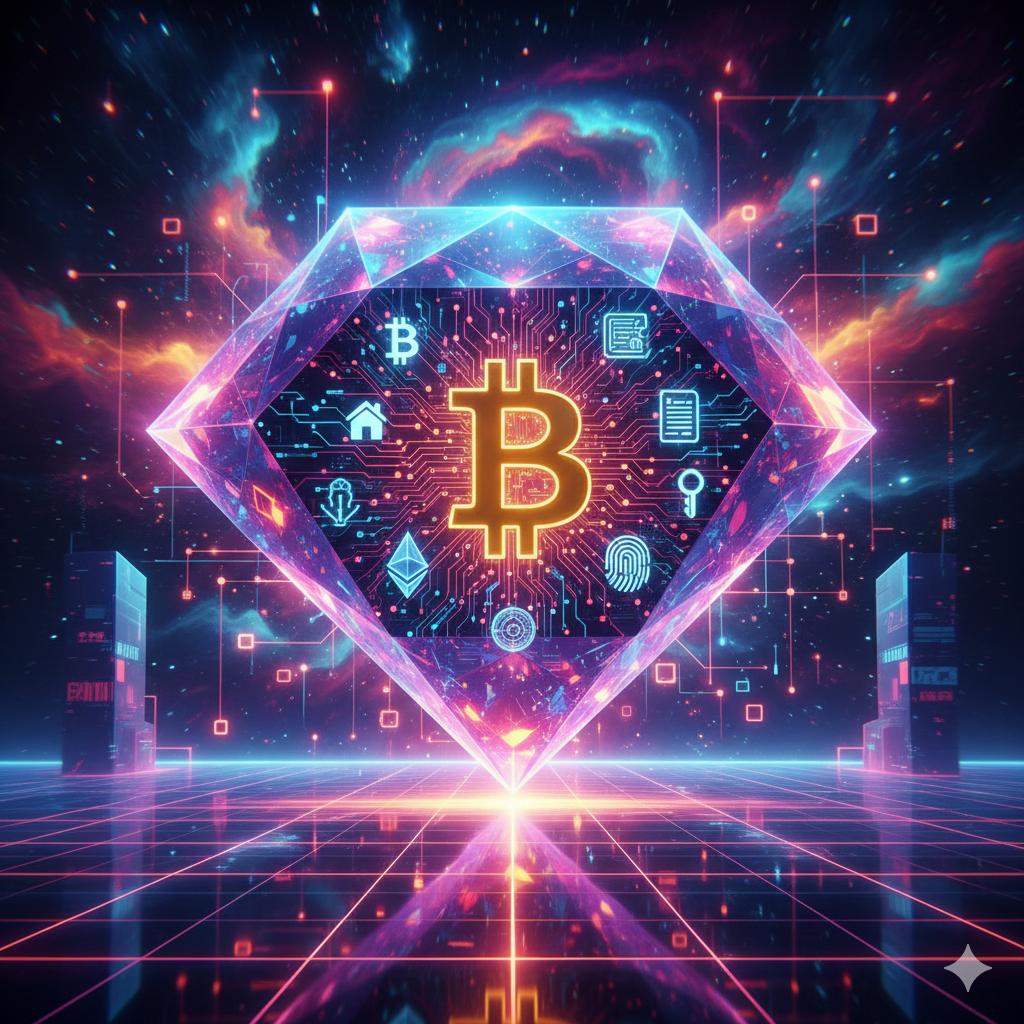
By 2025, blockchain technology has moved far beyond the world of cryptocurrencies. It has evolved into the backbone of a new global concept: verifiable digital ownership. Today, everything from creative content and identity documents to real estate records and virtual assets can be tokenized, stored, and transferred securely through decentralized networks.
For years, digital ownership was ambiguous—any file online could be copied, shared, or modified with no reliable way to verify the true owner. But blockchain is transforming this reality, offering a transparent and tamper-proof foundation that finally allows digital property to function like physical property.
Goodbye to the “Copy-Paste” Era
The internet made distribution easy—but authenticity nearly impossible. A photo, a video, or a piece of music could be duplicated endlessly with no trace of the original creator or owner.
Blockchain solves this by introducing the concept of unique digital assets with:
- Tamper-proof identity
- Transparent ownership history
- Verifiable authenticity
- Resistance to duplication
Even if a file can be copied, the ownership token cannot. This distinction allows creators, brands, and consumers to track the “true version” of any asset, eliminating one of the internet’s biggest flaws: the inability to prove digital scarcity.
Tokenization: Converting Anything Into a Digital Asset
One of the most transformative trends of 2025 is tokenization, the process of turning any real or digital item into a blockchain-based asset. When something is tokenized, it becomes:
- Traceable
- Transferable
- Fractionalizable
- Borderless
This is happening across multiple industries, including:
- Real estate
- Supply chains
- Media and entertainment
- Education
- Gaming
- Corporate documentation
- Healthcare
- Ticketing and events
Instead of relying on centralized organizations to track ownership, blockchain provides a global, transparent ledger. A house deed, a diploma, or a digital design can now be securely stored and moved without involving intermediaries.
Decentralized Digital Identity: The New Pillar of Ownership
Digital ownership is meaningless without a secure way to verify who owns what. That’s why Decentralized Identifiers (DIDs) have become essential in 2025.
DIDs allow people to:
- Own their digital identity independently
- Prove who they are without revealing personal data
- Control how their information is shared
- Sign agreements through blockchain cryptography
This shift marks the end of tech giants controlling user identity. Instead of companies managing your login credentials, the user becomes the sole owner of their identity — a crucial step toward fully decentralized digital ownership.
NFTs 2.0: From Hype to Real Utility
While early NFTs were often speculative collectibles, the NFT landscape in 2025 looks entirely different. NFTs have evolved into functional digital certificates with real-world applications:
- Academic credentials
- Software licenses
- Intellectual property rights
- Event access passes
- Virtual goods in interoperable gaming ecosystems
- Digital identity badges
- Token-gated memberships
These second-generation NFTs aren’t about speculative art—they’re about utility, verification, and ownership. They allow businesses and creators to offer digital experiences that are secure, traceable, and transferable.
Metaverse and Virtual Economies: A Natural Fit for Blockchain
The rise of metaverse environments has accelerated the need for secure digital ownership. In virtual worlds, users buy:
- Virtual land
- Avatar clothing
- 3D accessories
- Event tickets
- Music and digital art
- Collectibles and game items
Blockchain ensures that each digital asset is owned by the user—not by the platform. Even if a metaverse company shuts down or changes its rules, your assets remain in your wallet, fully transferable across platforms that support interoperability.
This creates a new kind of economy where users can accumulate long-term value from digital participation.
Gaming: The Fastest Adoption of Digital Ownership
The gaming industry is leading the adoption of blockchain in 2025. A new category of games, often called Web3 gaming, gives players true ownership of the items they earn or purchase.
Key transformations include:
- Player-owned marketplaces
- Cross-game interoperability
- Earn-while-playing reward systems
- Resalable in-game assets
- Shared gaming economies across platforms
Unlike traditional games where all assets are locked within the company’s servers, blockchain games empower players to control their digital goods. This fundamentally changes game economics, enabling players to profit from their achievements and creativity.
Legal Recognition and Regulatory Advances
One of the biggest reasons blockchain-based ownership is accelerating in 2025 is the growing legal recognition of digital assets. Several countries now:
- Accept blockchain records as legal proof
- Recognize smart contracts as binding agreements
- Allow tokenized assets in inheritance law
- Enable fractional ownership of physical property
As governments integrate blockchain into legal frameworks, digital ownership becomes more reliable, enforceable, and mainstream.
Challenges and Limitations Ahead
Despite the rapid growth, several challenges remain:
1. Scalability
Some blockchains still struggle with high traffic and transaction fees.
2. Interoperability
Not all digital assets can move freely across networks.
3. Security Risks
Users must learn to protect their wallets and private keys.
4. Mass Adoption
The concept of self-custody is still unfamiliar to many consumers.
However, ongoing innovation—layer-two scaling, cross-chain bridges, and improved wallet designs—is helping overcome the barriers.
Conclusion: The Foundation of a New Digital Economy
In 2025, blockchain is redefining what it means to own something in the digital world. It provides the foundation for:
- Authentic digital property
- Decentralized identity
- Transparent asset transactions
- Secure virtual economies
- Consumer-owned data
- Borderless, frictionless markets
This evolution is not just technological—it is philosophical. Blockchain gives individuals control over their assets, identity, and creative output in a way the internet never allowed before.
Más historias
Can the World Avoid a 2025 Recession? Economists Are Divided
The Future of Work and Automation: How It Will Reshape the Global Economy
The Global Debt Problem Is Worse Than You Think