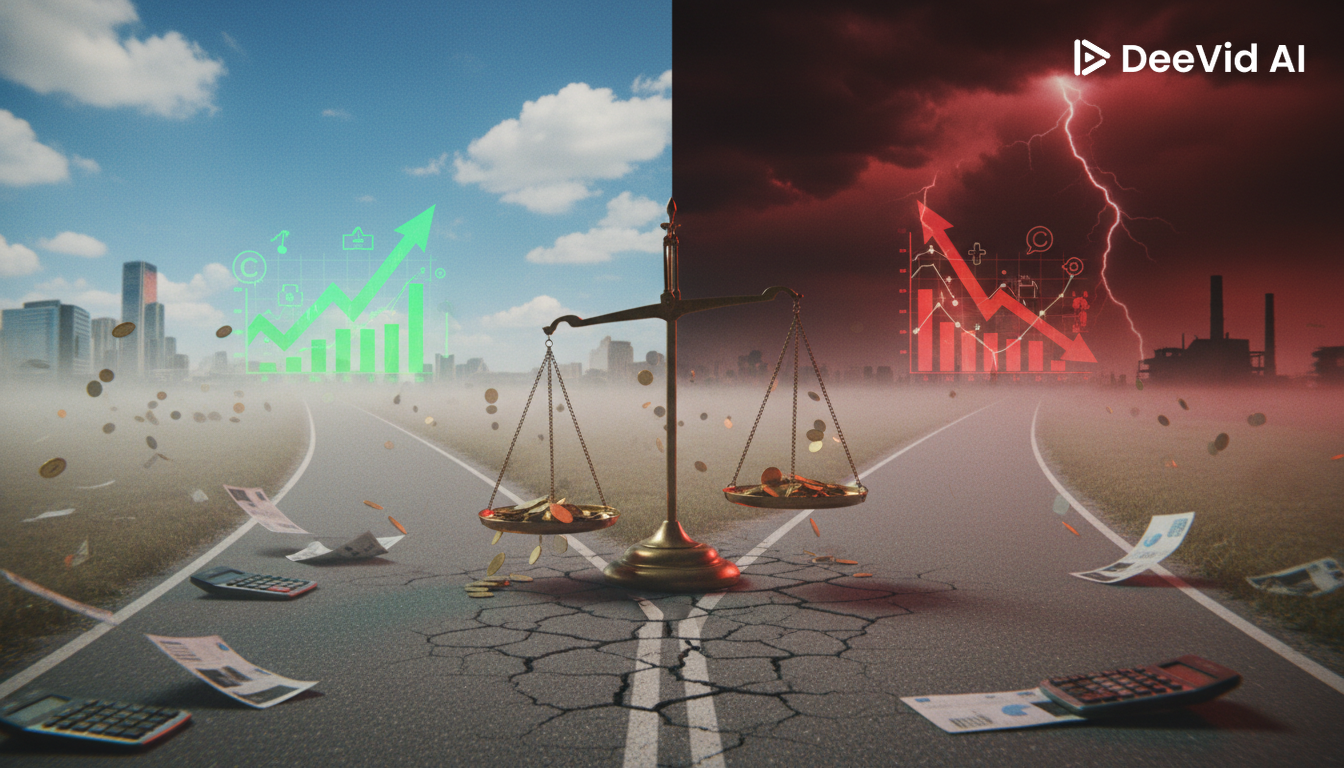
The global economy is entering a period of profound transformation, shaped by rapid advances in automation, robotics, and artificial intelligence. Unlike previous technological revolutions that unfolded gradually over decades, today’s innovations are accelerating at an unprecedented pace.
Automation is no longer limited to repetitive industrial tasks. It now extends into analytical work, creative processes, and even complex decision-making—areas once considered exclusive to highly skilled professionals. As these technologies evolve, they are fundamentally reshaping industries, labor markets, and the global balance of economic power.
The future of work will not simply involve replacing human labor. It will redefine how businesses operate, how societies function, and how individuals build and adapt their careers.
1. The Technologies Driving the Automation Era
Artificial Intelligence and Machine Learning
AI systems are becoming increasingly sophisticated, capable of handling data analysis, forecasting, customer service, and strategic decision-making. Machine learning enables these systems to continuously improve, making them more efficient and adaptive than traditional software.
Robotics and Autonomous Systems
Robotics has expanded far beyond factory floors. Advanced machines are now used in logistics, agriculture, construction, and healthcare. Autonomous vehicles and drones are also transforming transportation and delivery networks.
Advanced Data Infrastructure
Cloud computing, edge computing, and 5G networks allow massive volumes of data to be processed in real time. This infrastructure enables seamless integration of automation across industries and supports faster, more efficient operations.
Generative AI
Generative AI is revolutionizing content creation, engineering, and research. These systems can generate reports, design prototypes, write code, and optimize workflows—often at speeds far exceeding human capabilities.
2. How Automation Will Transform Industries
Automation is impacting every sector, but its effects vary depending on the industry.
Industry transformation at a glance:
- Manufacturing: Smart factories, fewer errors, faster production
- Finance: AI-driven trading, fraud detection, automated services
- Healthcare: Better diagnostics, robotic surgery, faster research
- Retail: Automated logistics, personalized shopping experiences
- Agriculture: Precision farming, autonomous machinery
Across all sectors, the pattern is clear: higher productivity with lower dependence on manual labor.
3. The Impact on the Global Workforce
Job Displacement Is Real—But Uneven
Automation is expected to replace millions of jobs, particularly those involving repetitive or routine tasks. Sectors such as manufacturing, transportation, administrative services, and basic customer support are especially vulnerable.
However, the impact will vary. Developed economies may benefit from automation, while developing countries that rely on low-cost labor could face greater disruption.
New Jobs Will Emerge
At the same time, new roles are being created in technology, data science, engineering, cybersecurity, and digital services. The challenge is that these jobs require higher levels of skill and education.
Upskilling Will Become Essential
Future-proof skills include:
- Data analysis
- Digital literacy
- Critical thinking
- Programming and system management
- Creativity and complex problem-solving
4. Economic Consequences of Widespread Automation
Automation will reshape not only jobs but also the structure of the global economy.
Key economic effects:
- Higher productivity: Lower costs and increased output
- Rising inequality: Gains concentrated in high-skill sectors
- Global competition: Tech-advanced countries gain advantage
- Corporate change: Leaner, technology-driven organizations

5. The Future Labor Market: What Will Work Look Like?
Work is not disappearing—it is evolving.
- Hybrid and remote work models will remain common
- Humans will increasingly collaborate with machines
- Freelancing and independent work will expand
- Digital platforms will play a larger role in employment
The traditional concept of a stable, long-term job is gradually being replaced by a more flexible and dynamic model.
6. Preparing for the Economic Future
Adapting to this transformation requires action at every level.
- Governments must update policies, taxes, and social systems
- Businesses must invest in training and responsible automation
- Individuals must embrace continuous learning
The ability to adapt will determine long-term success.
Conclusion: A Future Full of Risks and Opportunities
Automation will reshape the global economy in ways that are both promising and challenging.
Productivity will rise, industries will evolve, and new jobs will emerge. But the transition may be disruptive for millions of workers and could deepen inequality if not managed carefully.
The future of work will not be defined by machines alone—it will be shaped by how societies, governments, and individuals respond to the changes ahead. Those who prepare early will be best positioned to succeed in the new automated world.



Más historias
The Future of Work and Automation: How It Will Reshape the Global Economy
The Global Debt Problem Is Worse Than You Think
The Rise of De-Dollarization: What Happens If the Dollar Loses Dominance?