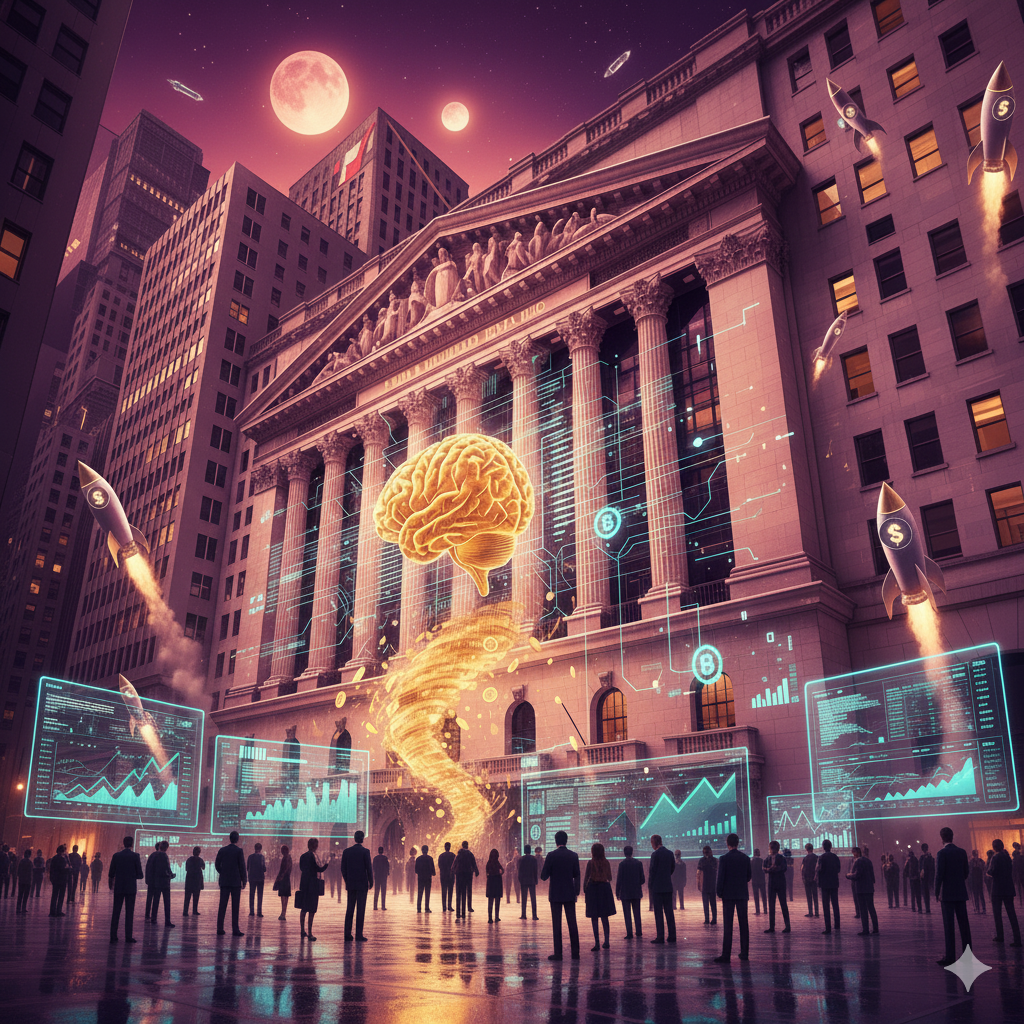
For decades, Wall Street was defined by human decision-making, fast instincts, and trading floors filled with brokers shouting orders. But those iconic scenes are fading. A new force is reshaping global financial markets: AI-driven trading algorithms.
What once was a niche tool used by a handful of quantitative hedge funds has evolved into a mainstream necessity. Today, major investment banks, asset managers, and institutional investors rely heavily—often primarily—on advanced artificial intelligence. Wall Street is no longer just experimenting with AI. It is fully invested in it.
From Quant Models to Intelligent Algorithmic Systems
Traditional quantitative trading relied on statistical models built around fixed assumptions. These models were powerful but limited: when market conditions changed, the models sometimes failed.
AI, however, works differently.
Machine learning and deep learning systems can study patterns, evolve with the market, and even detect correlations that humans cannot see. Instead of relying on pre-programmed rules, these algorithms learn, adapt, and refine themselves with every new dataset.
This shift from rigid models to adaptive intelligence has prompted firms like Goldman Sachs and JPMorgan to expand their AI research labs aggressively. Their goal is simple: stay ahead of competitors in a world where speed and intelligence determine profit.
Why Wall Street Is Betting Big on AI
The move toward AI-driven trading algorithms is not just about technology—it is about strategy, survival, and maximizing returns.
1. AI Beats Humans in Speed and Complexity
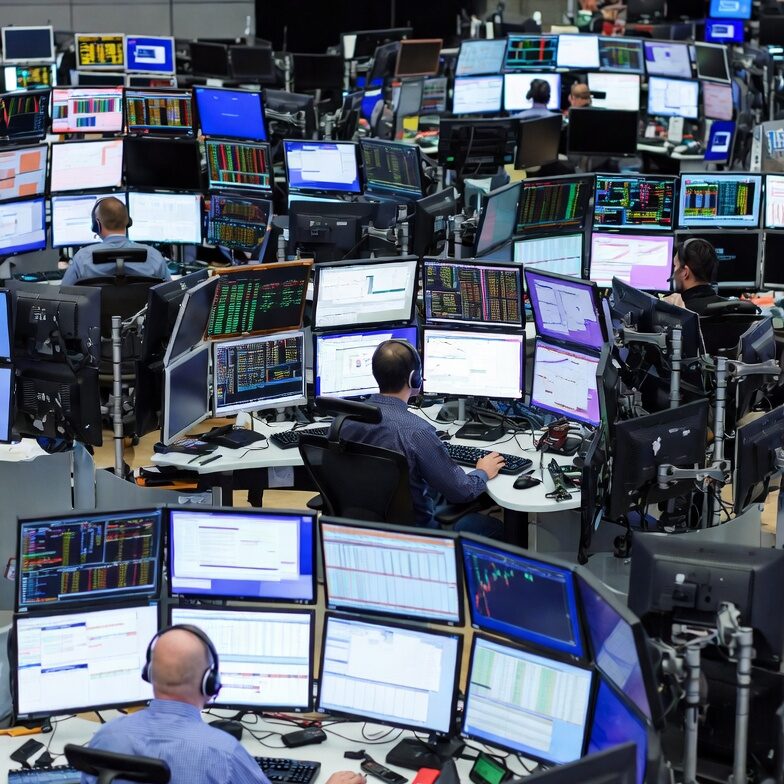
Markets move in milliseconds. A human trader cannot react fast enough to global news, price shifts, or economic indicators. AI systems, however, can process:
- thousands of data sources
- real-time news
- social media sentiment
- macroeconomic signals
- chart patterns across multiple exchanges
This ability to analyze everything simultaneously gives AI traders an unbeatable advantage.
2. Modern Markets Are Too Complex for Human Analysis
Global markets today are influenced by geopolitical conflicts, climate events, digital currencies, supply chain fluctuations, and AI-driven businesses. No human can interpret all these factors in real time.
AI thrives in complexity. It sees patterns invisible to analysts and can quickly test millions of hypothetical scenarios. This makes it invaluable in an unpredictable financial landscape.
3. AI Eliminates Emotional Decision-Making
Fear and greed have triggered some of the worst financial mistakes in history. Algorithms, however, remain neutral. They rely solely on data and probabilities.
For banks and hedge funds, removing emotional bias is a major step toward reducing risk.
4. The Competitive Pressure Is Intense
Once some firms adopt AI, every other firm must follow. Otherwise, they fall behind. This creates a powerful cycle:
More AI adoption → more competitive pressure → even faster adoption.
Wall Street is now in a technological arms race—and no one wants to be left out.
How AI Algorithms Are Transforming Trading
AI is not limited to one strategy. It reshapes multiple areas of trading and investment.
1. High-Frequency Trading (HFT)
HFT firms rely on algorithms capable of making trades within microseconds. AI has taken this to a new level, predicting market movements with incredible accuracy.
Even the smallest price inefficiency becomes an opportunity for profit.
2. Long-Term Portfolio Optimization
Asset managers now use machine learning models to forecast returns, rebalance portfolios, and detect long-term macroeconomic trends.
Instead of simple diversification formulas, AI creates dynamic, data-driven portfolios.
3. Real-Time Sentiment Analysis
Modern AI can read thousands of headlines, earnings reports, social media posts, and even political speeches. By interpreting sentiment, algorithms can anticipate market reactions before they happen.
If a CEO’s tone during an earnings call subtly shifts, an AI can detect it instantly—even if humans don’t notice.
4. Predictive Risk Management
AI systems continuously monitor volatility, liquidity conditions, macroeconomic risks, and unusual market behavior.
This allows them to automatically adjust positions before major events impact trading.
The Risks Behind AI-Driven Trading
Despite its power, AI trading introduces new vulnerabilities.
1. Flash Crashes Caused by Algorithm Interactions
When multiple AI systems react to the same data at the same time, they can intensify volatility, triggering sudden and severe market drops.
This happened in the 2010 Flash Crash—long before today’s far more complex AI systems.
2. Lack of Transparency
Many AI models operate as “black boxes.” Their decisions are difficult to interpret, even for their creators. This raises concerns about accountability and oversight.
3. Potential for Unintentional Market Manipulation
An AI might identify strategies that legally exploit micro-patterns but create large-scale distortions when executed at scale. Regulators are increasingly concerned about this.
4. Regulations Are Not Evolving Fast Enough
Financial technology is advancing more rapidly than policy. Governments are struggling to monitor and regulate systems that even specialists can barely understand.
This page talks about this: http://AICompetence.org
The Future: Humans and AI Working Together
AI is not replacing traders outright—it is changing what traders do. Instead of manually executing trades, humans now:
- design algorithms
- monitor their performance
- analyze anomalies
- adjust strategies
- ensure compliance and ethical standards
The most successful firms combine human judgment with machine precision. This hybrid model is shaping the future of Wall Street.

Más historias
Can the World Avoid a 2025 Recession? Economists Are Divided
The Future of Work and Automation: How It Will Reshape the Global Economy
The Global Debt Problem Is Worse Than You Think